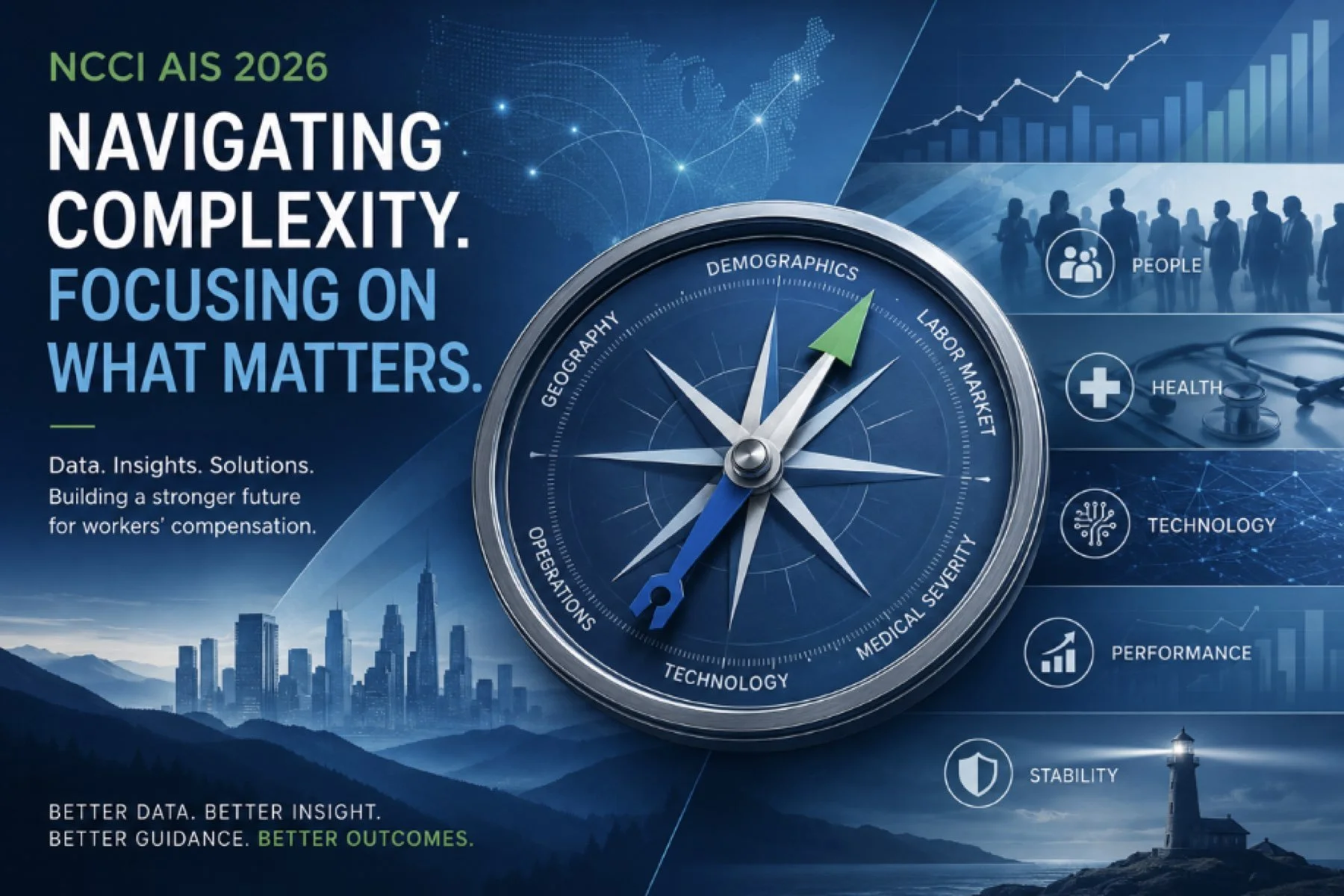
NCCI AIS 2026: Workers’ Compensation Remains Strong, but the Internal Mechanics Continue to Shift
Author - Reni Snider, Senior Account Executive at Libertate Insurance
I was very excited to be given the opportunity to attend the NCCI Annual Insights Symposium 2026 this year.
AIS continues to be one of the most valuable events in the workers’ compensation industry, not simply because of the data presented, but because of the opportunity to step back and examine the broader economic, demographic, medical, technological, and operational forces shaping the system as a whole.
This year’s symposium reinforced a theme that has been building for several years.
The workers’ compensation industry remains remarkably healthy by historical standards, but the interaction between demographic complexity, labor market normalization, medical utilization, geographic concentration, technological advancement, and operational execution continues to shape outcomes in increasingly measurable ways.
From Donna Glenn’s State of the Line presentation to discussions surrounding workforce demographics, medical severity, labor markets, artificial intelligence, and economic trends, AIS 2026 offered a thoughtful look into both the current condition of the workers’ compensation system and the structural forces continuing to influence its future.
The Workers’ Compensation System Remains Financially Strong
The overall financial condition of the workers’ compensation system remains exceptionally healthy.
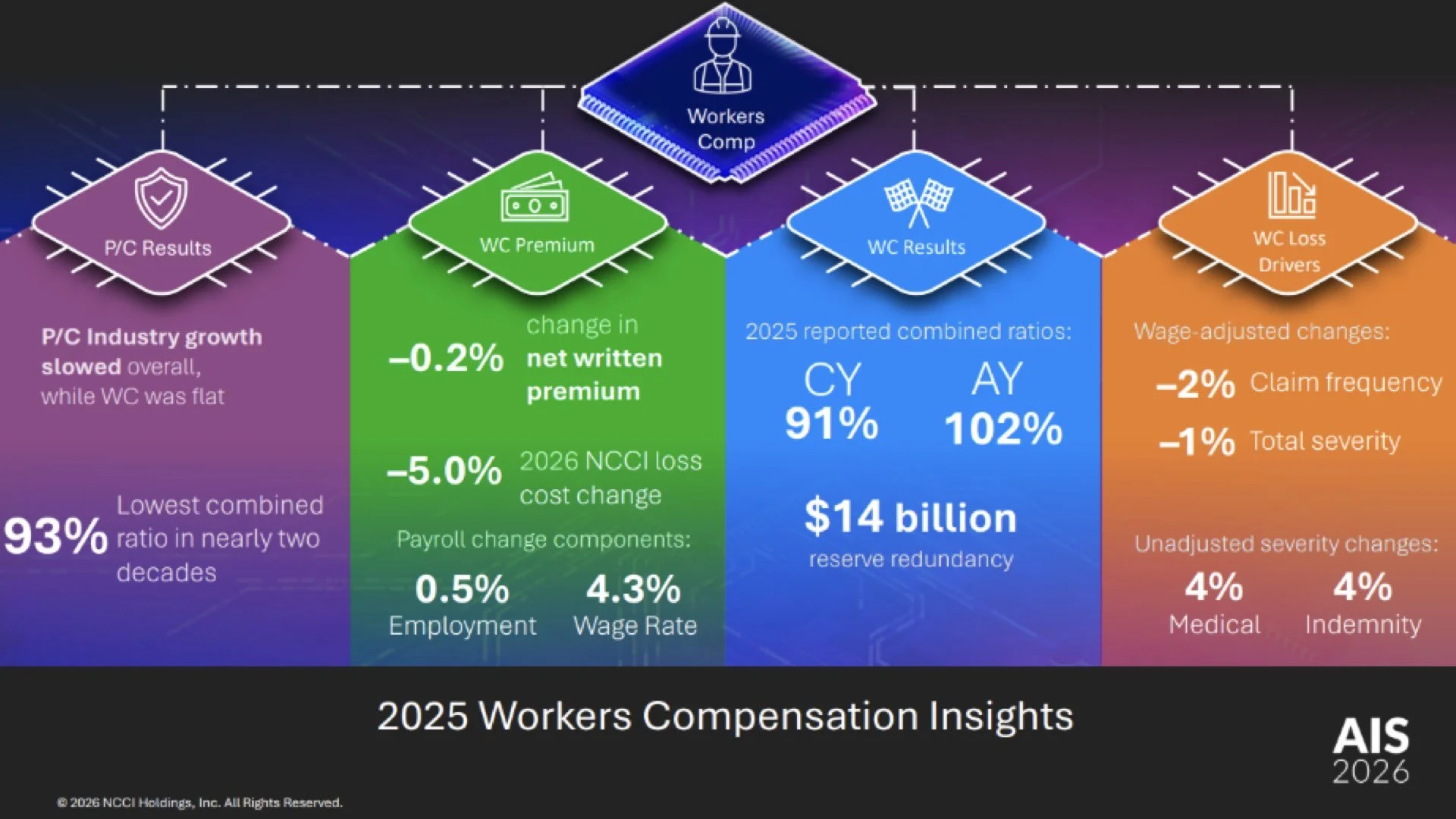
NCCI reported a 2025 calendar year combined ratio of 91%, representing the industry’s 12th consecutive year of underwriting profitability. While still extremely strong by historical standards, the ratio increased from 86% in the prior year’s report, signaling some moderation from the extraordinarily profitable conditions seen over the last several years.
Similarly, the accident year combined ratio moved from 92% to 102% year over year, suggesting current accident year profitability continues normalizing toward more sustainable long-term levels.
The industry also continues maintaining a strong reserve position, though reserve redundancy estimates declined from approximately $16 billion last year to roughly $14 billion this year.
None of these figures suggest systemic deterioration.
Rather, AIS 2026 reinforced that many of the broad profitability tailwinds supporting workers’ compensation over the past decade continue moderating toward more normalized conditions.
The result is an environment where underwriting discipline, operational consistency, workforce composition, and claim execution remain critical differentiators.
Residual market participation also remains historically low, reinforcing the continued availability of workers’ compensation capacity throughout much of the market.
Demographic and Geographic Shifts Continue to Influence Risk Profiles
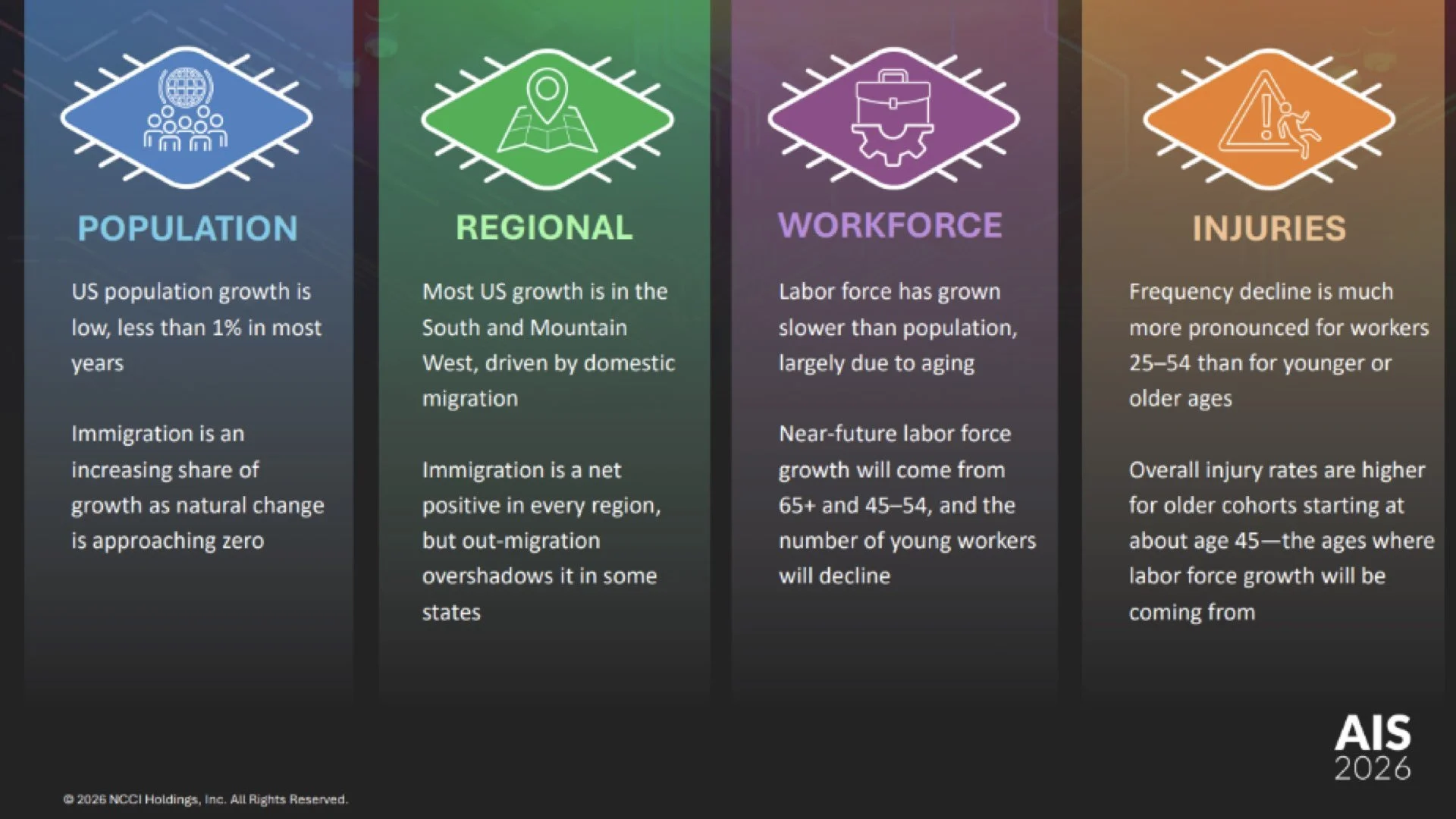
One of the more compelling themes throughout the symposium involved the continued impact of demographic and geographic shifts across the US workforce.
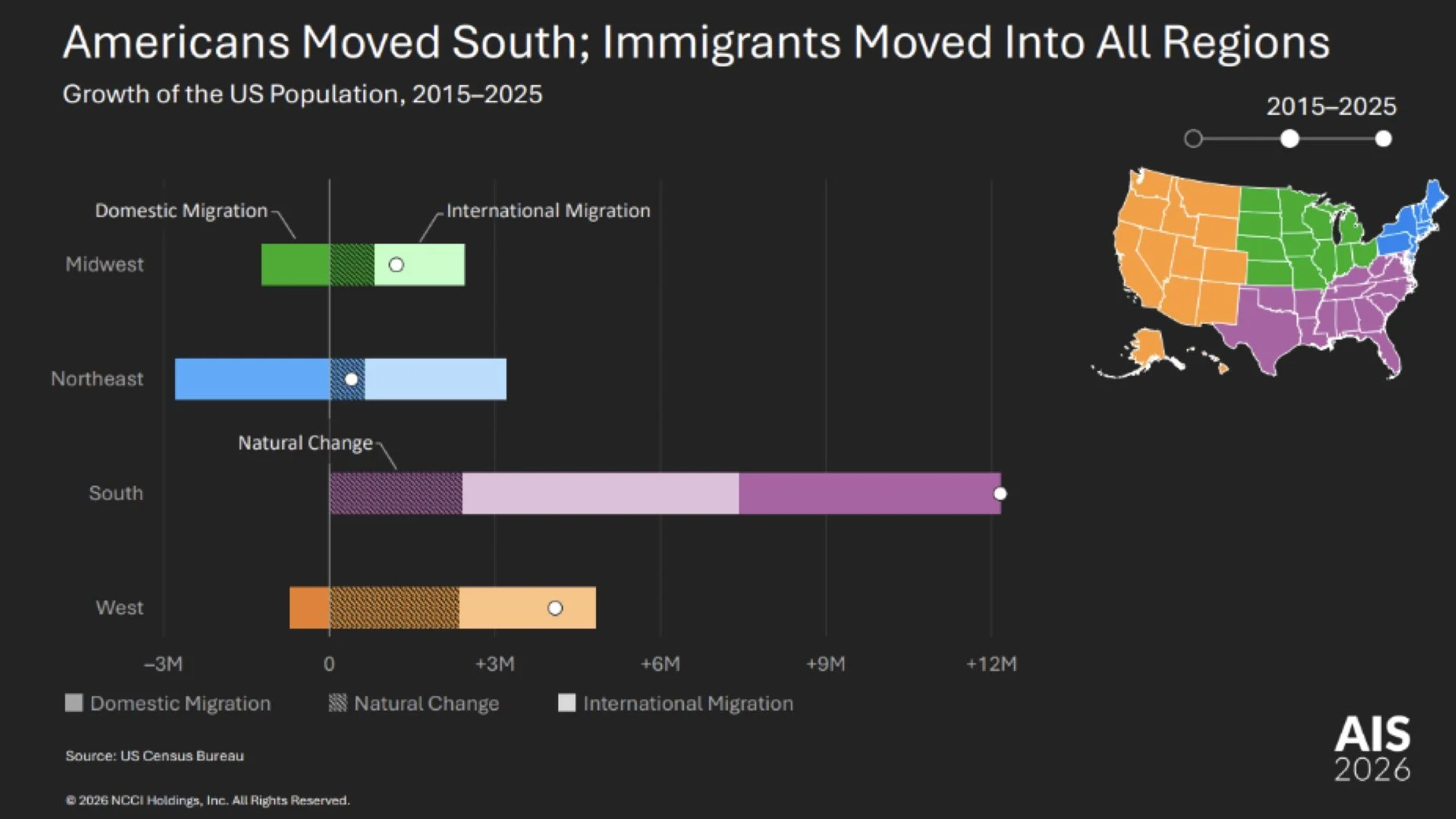
NCCI’s demographic presentations highlighted that US population growth has averaged less than 1% annually over the last two decades, with immigration representing an increasingly important contributor to workforce growth as natural population growth trends continue slowing.
At the same time, population growth remains highly concentrated geographically.
The South and Mountain West continue experiencing the strongest domestic migration trends, while portions of the Midwest and Northeast continue seeing slower growth or population outflows.
For PEOs and employers operating across multiple jurisdictions, these trends matter.
Workforce growth patterns influence:
• labor availability
• industry concentration
• wage pressures
• healthcare utilization
• claim characteristics
• and overall exposure composition
Geographic differences also continue shaping workers’ compensation outcomes operationally and financially.
States such as Nevada continue carrying significantly higher indemnity exposure potential due to elevated wage replacement caps, while multiple jurisdictions continue implementing medical fee schedule adjustments tied directly or indirectly to inflationary indices.
Florida, for example, continues evolving its reimbursement framework through periodic fee schedule adjustments, while other states maintain systems where provider reimbursement levels move dynamically alongside broader inflationary conditions.
Over time, these jurisdictional differences compound.
AIS 2026 continued reinforcing that geography is not simply a sales or expansion consideration inside workers’ compensation programs.
It remains deeply connected to workforce composition, medical systems, labor markets, claim severity, and long-term underwriting performance.
Medical Severity Remains a Nuanced Conversation
Medical severity remained a major topic throughout the symposium, but the discussion appropriately focused on nuance rather than oversimplification.
While medical severity trends remain elevated compared to historical norms, AIS 2026 reinforced that medical inflation alone does not fully explain the current environment.
NCCI’s presentations highlighted the continued importance of several additional variables influencing medical utilization and claim outcomes, including:
• workforce age
• wage levels
• comorbidities
• treatment patterns
• injury types
• and claim duration dynamics
One particularly interesting finding involved the relationship between wages and medical utilization.
The data presented showed that higher wage workers generally experience greater medical utilization and higher medical costs, including increased surgical frequency and physician payments.
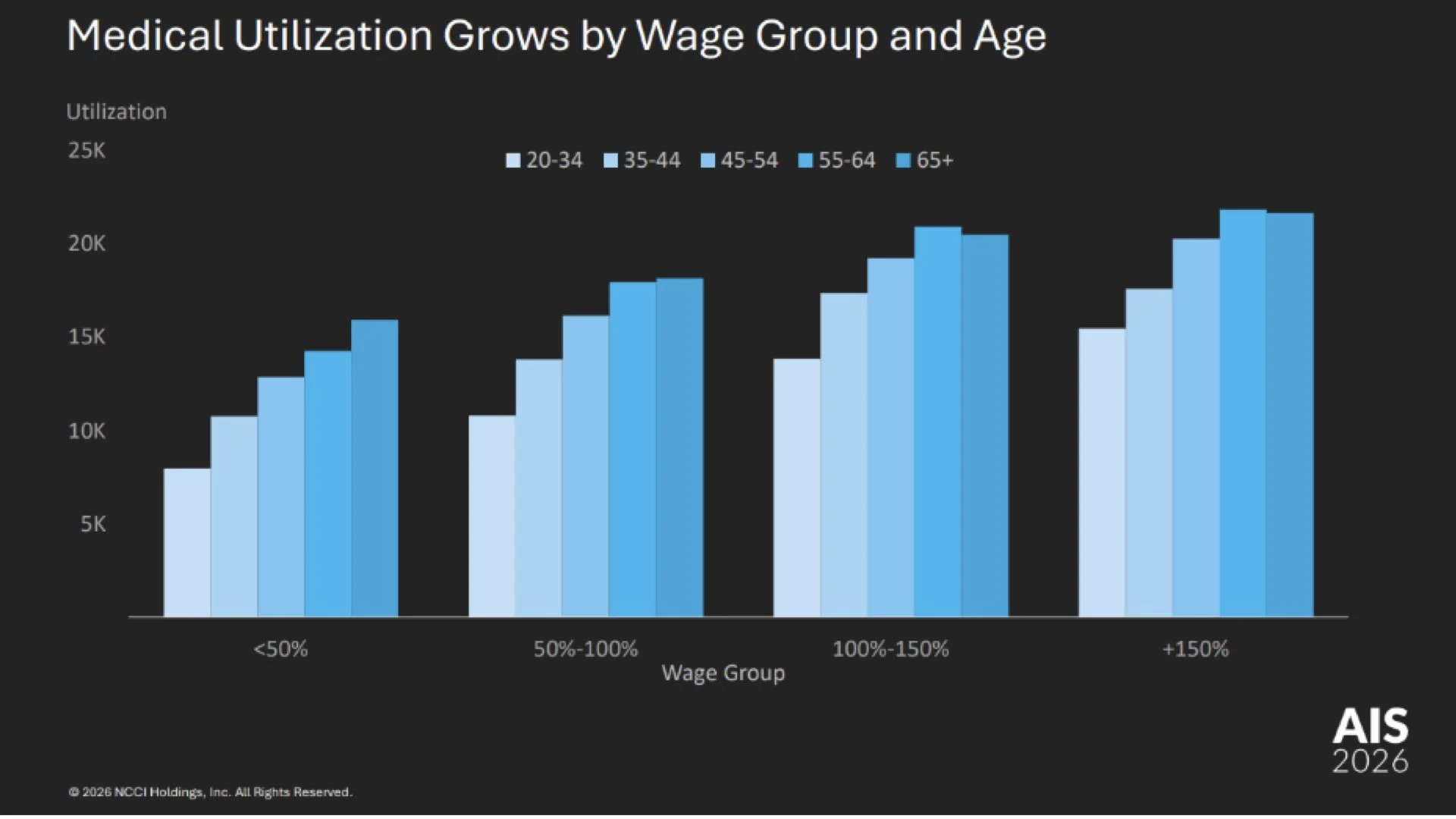
Age also remains an important factor.
Workers age 65 and older continue demonstrating substantially higher medical utilization than younger demographic groups, while certain comorbidities—including diabetes, hypertension, degenerative conditions, and vascular disease—remain strongly correlated with elevated utilization patterns.
For employers and PEO operators, these findings reinforce an important reality:
Workforce composition matters.
Medical outcomes are shaped not only by injury occurrence itself, but also by the broader demographic and health characteristics of the workforce experiencing those injuries.

Labor Market Normalization Continues
AIS 2026 also provided a balanced perspective on the broader labor market and economic environment.
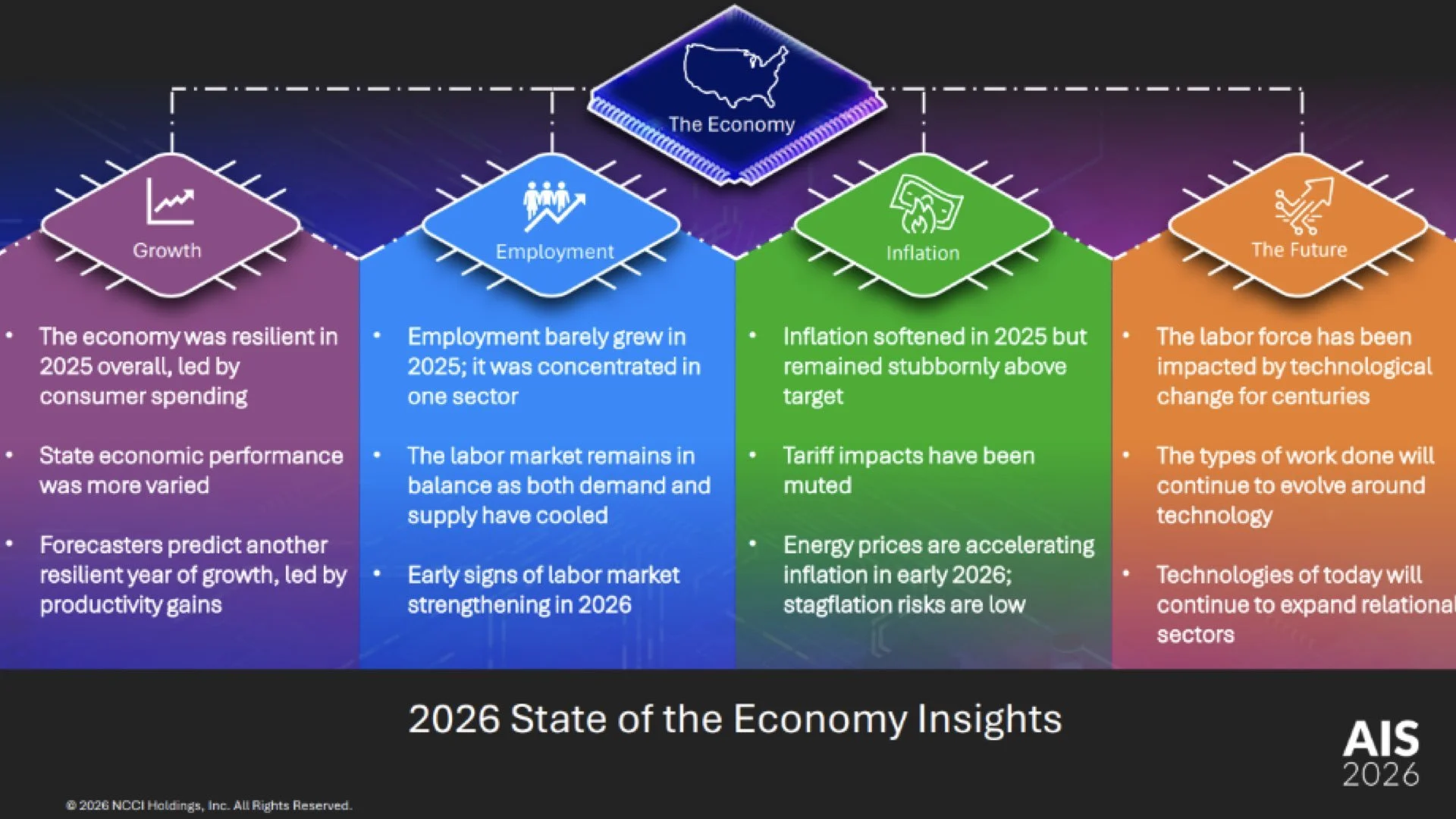
NCCI economists noted that 2025 represented one of the slowest years of employment growth outside of a recession in more than two decades.
Job openings, hiring activity, and labor demand have all moderated from the elevated levels experienced during the post-pandemic expansion cycle.
At the same time, unemployment remains historically low, wage growth continues supporting payroll expansion, and the labor market overall remains relatively balanced.
One of the more important economic discussions throughout the symposium centered around the distinction between nominal economic growth and real productivity growth.
Broadly speaking, economies grow in two primary ways:
adding more workers
increasing productivity from the existing workforce
Current demographic realities make the first pathway increasingly challenging.
Population growth remains slow, workforce participation growth has moderated, and portions of the labor market continue aging.
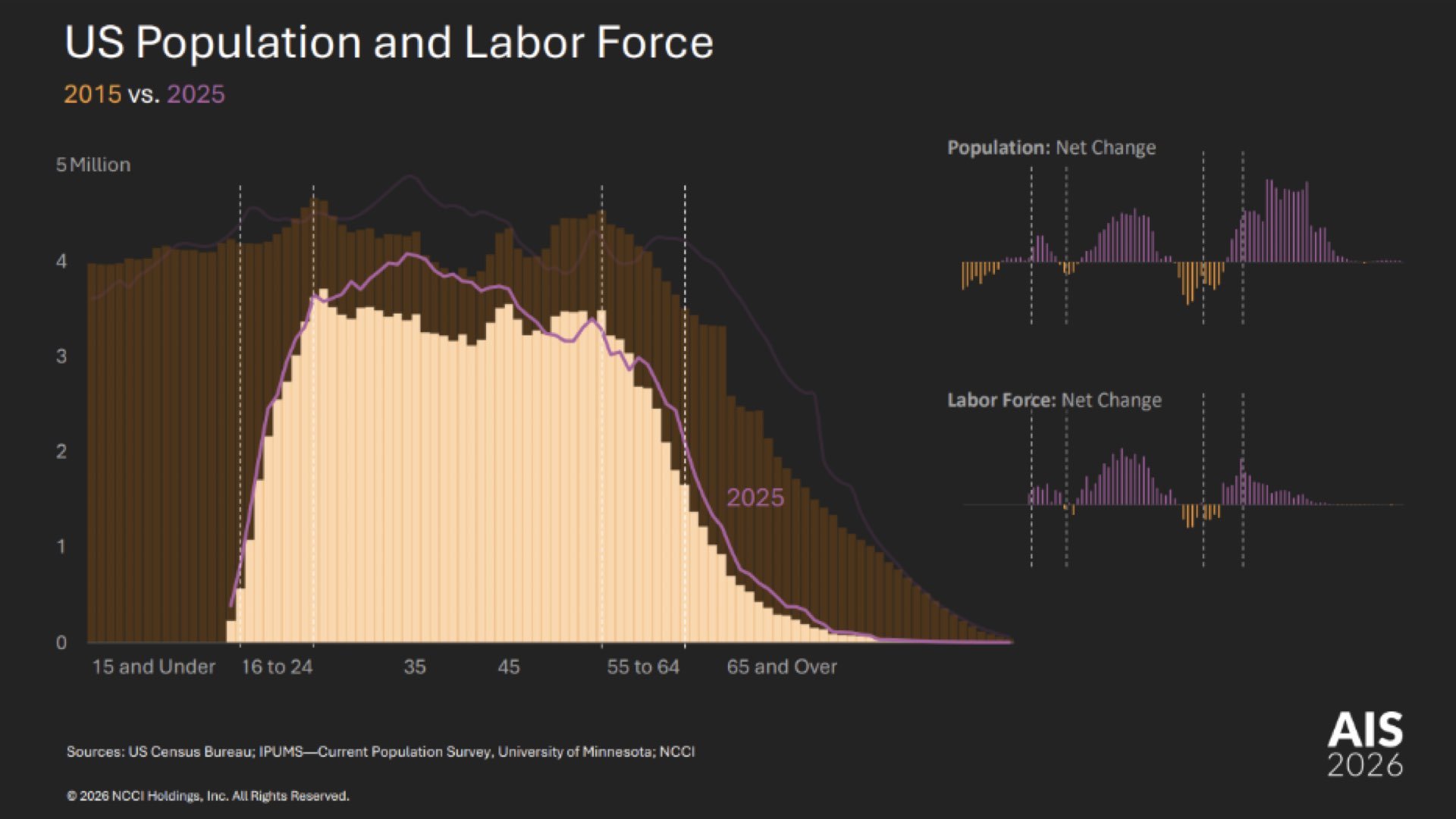
As a result, productivity growth and workforce efficiency increasingly matter.
This becomes especially important when evaluating payroll growth inside workers’ compensation.
NCCI reported approximately:
• 0.5% employment growth
• 4.3% wage rate growth
• and 4.8% payroll growth
Importantly, much of the current payroll growth environment continues being driven by wage inflation rather than substantial workforce expansion.
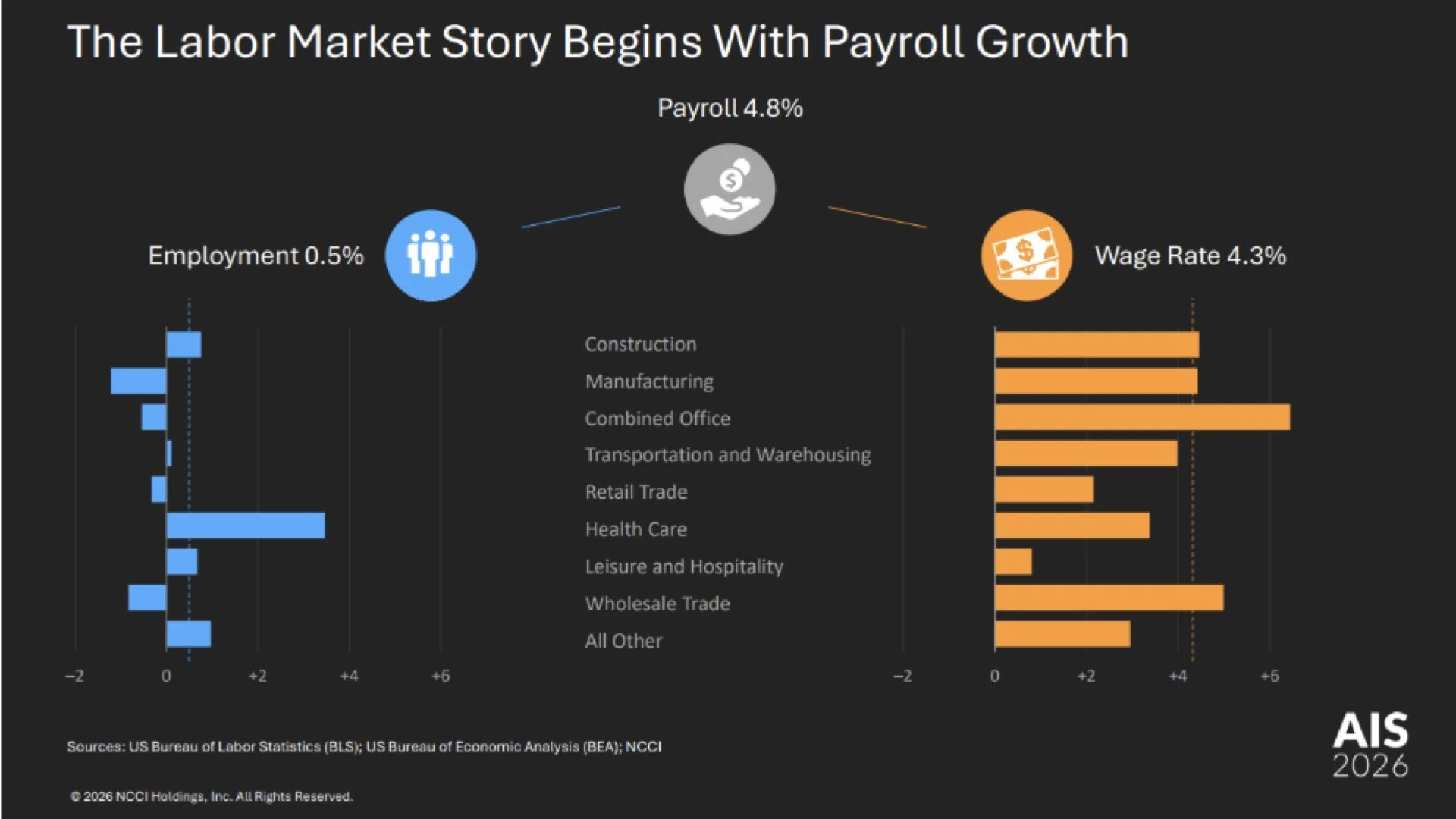
In other words, real wage growth, workforce productivity, and labor efficiency remain critically important variables moving forward.
The symposium also highlighted an operationally important point that often receives less attention.
Reduced workforce turnover may support improved frequency performance over time through greater workforce stability, experience retention, and operational familiarity.
While labor markets continue normalizing, AIS 2026 suggested that many underlying economic conditions supporting workers’ compensation premium stability remain intact.
AI Is Transitioning From Concept to Operational Infrastructure
One of the more thought-provoking portions of AIS 2026 came from keynote speaker Ethan Mollick, whose discussion centered on the accelerating role artificial intelligence is expected to play across business, economics, and everyday life.
While AI has been a topic of discussion within insurance and risk management for several years, the broader tone of this year’s conversations suggested the industry is increasingly moving beyond theoretical conversations and toward practical implementation.
Importantly, the discussion surrounding AI was not framed as a replacement for human judgment.
Rather, much of the focus centered on how AI may augment decision-making, improve efficiency, expand analytical capabilities, and assist organizations in managing increasingly complex systems and data environments.
For workers’ compensation, insurance, and PEO operations specifically, the potential applications are substantial.
Across the industry, AI is already being explored in areas such as:
• underwriting analysis
• claims triage
• fraud detection
• medical management
• litigation analysis
• reserving support
• workforce analytics
• safety monitoring
• loss prevention modeling
• client service operations
• and predictive trend identification
The implications extend well beyond insurance operations themselves.
From a broader economic perspective, AI may also influence:
• workforce productivity
• labor demand
• job composition
• wage structures
• training requirements
• and long-term employment models
This ties directly into several of the broader labor market discussions presented throughout AIS 2026.
As workforce growth moderates due to demographic realities, productivity growth becomes increasingly important to long-term economic expansion.
Remember, economies grow by either:
expanding the labor force
improving productivity from the existing workforce
Given current population and workforce participation trends, many organizations are increasingly focused on the second path.
AI is expected to play a meaningful role in that evolution.
For PEOs specifically, the long-term implications may be especially significant because the industry sits directly at the intersection of:
• workforce management
• compliance
• payroll
• benefits
• safety
• risk financing
• and human capital strategy
Over time, AI-assisted systems may help organizations identify operational patterns, emerging risks, claim trends, workforce vulnerabilities, and productivity opportunities with far greater speed and precision than traditional methods alone.
At the same time, AIS 2026 appropriately reinforced the importance of maintaining balance and human oversight.
Workers’ compensation remains fundamentally human.
Claims involve people.
Employment involves people.
Recovery involves people.
Leadership involves people.
Technology may improve visibility, efficiency, and decision support, but long-term outcomes will still depend heavily on judgment, execution, communication, empathy, and operational discipline.
Perhaps most importantly, the conversations surrounding AI at AIS 2026 reflected a broader recognition that technological advancement is unlikely to remain isolated to any single function or industry.
Its influence is expected to extend across insurance, economics, workforce management, healthcare, and daily life itself.
The challenge for organizations moving forward may not simply be whether AI becomes integrated into operations.
It may be how effectively businesses learn to combine technological capability with thoughtful human decision-making inside increasingly complex environments.
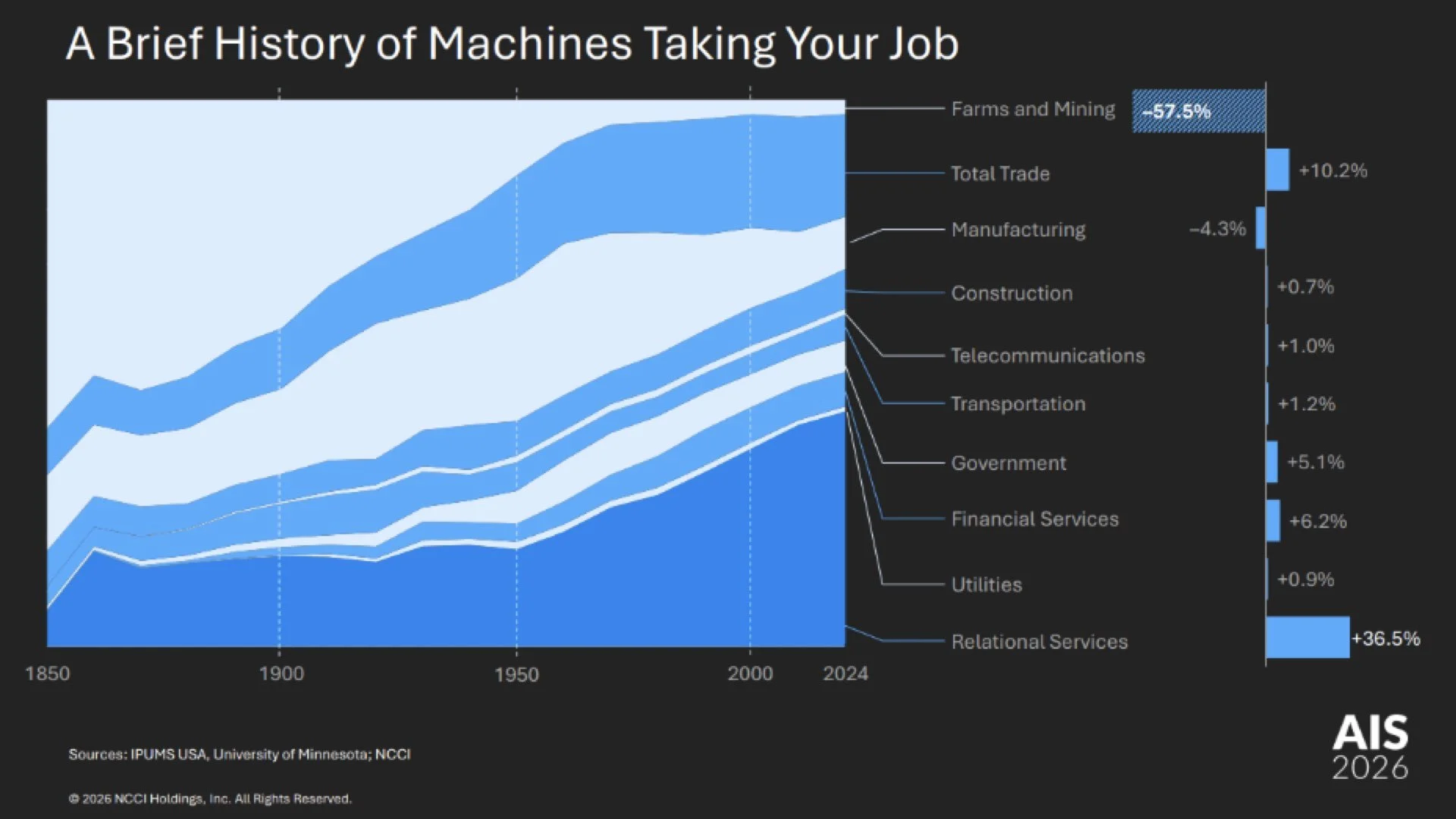
While this moment and technology is profound, this is not the first time humans have found themselves at this intersection. The advent, adoption and widespread implementation of earlier technologies prompted many of the same concerns and conversations we are sharing today.
The last 175 years has brought about steam engines, electricity, the industrial revolution, personal computers, the internet, and cell phones, just to mention a few. Each new technological breakthrough has come with its own critics and concerns, but humans are profoundly resourceful and adaptable.
Afterall, “Man never made any material as resilient as the human spirit.” — Bernard Williams
What This Means for PEOs
For PEO operators, AIS 2026 reinforced the importance of maintaining a broad operational view of risk management.
Workers’ compensation outcomes continue being influenced by far more than premium levels or isolated claim activity.
The interaction between:
• workforce demographics
• geographic concentration
• labor market conditions
• wage growth
• medical utilization
• industry mix
• technological capability
• and operational execution
continues shaping overall program performance.
As profitability normalizes from historically elevated levels, operational consistency remains critical.
Early claim management, return-to-work execution, workforce composition, hiring quality, safety culture, and underwriting discipline all continue playing meaningful roles in long-term performance.
The symposium also reinforced the importance of adapting loss prevention and workforce management strategies to an aging labor force.
As workforce demographics continue evolving, employers and PEOs may increasingly need to tailor:
• ergonomic programs
• return-to-work strategies
• physical job design
• training approaches
• and injury prevention efforts
to support older and more experienced worker populations who may present different utilization and recovery characteristics than younger labor segments.
AIS 2026 did not necessarily introduce entirely new trends.
What it did provide was a thoughtful reminder that workers’ compensation remains a deeply interconnected system—one where demographic, economic, medical, technological, and operational forces continue interacting in ways that matter for employers, carriers, PEOs, and injured workers alike.
One particularly encouraging takeaway from the symposium was the continued investment NCCI is making into expanding and refining its analytical capabilities and data collection methodologies.
Throughout multiple sessions, it was evident that the organization continues seeking broader, deeper, and more granular insight into the variables shaping claim outcomes and system performance.
That matters.
Better data leads to better insight.
Better insight leads to better guidance.
Better guidance leads to better outcomes.
This is at the heart of the NCCI.
AIS 2026 reinforced that NCCI—and the many industry stakeholders helping guide and support its work—remain deeply committed to the long-term health, stability, and success of the workers’ compensation system as a whole.
And while the industry remains financially strong, the long-term differentiators may increasingly belong to organizations best equipped to understand and manage the complexity inside the workforce itself.