
Florida employers could see a 7.4% average reduction in workers’ comp costs
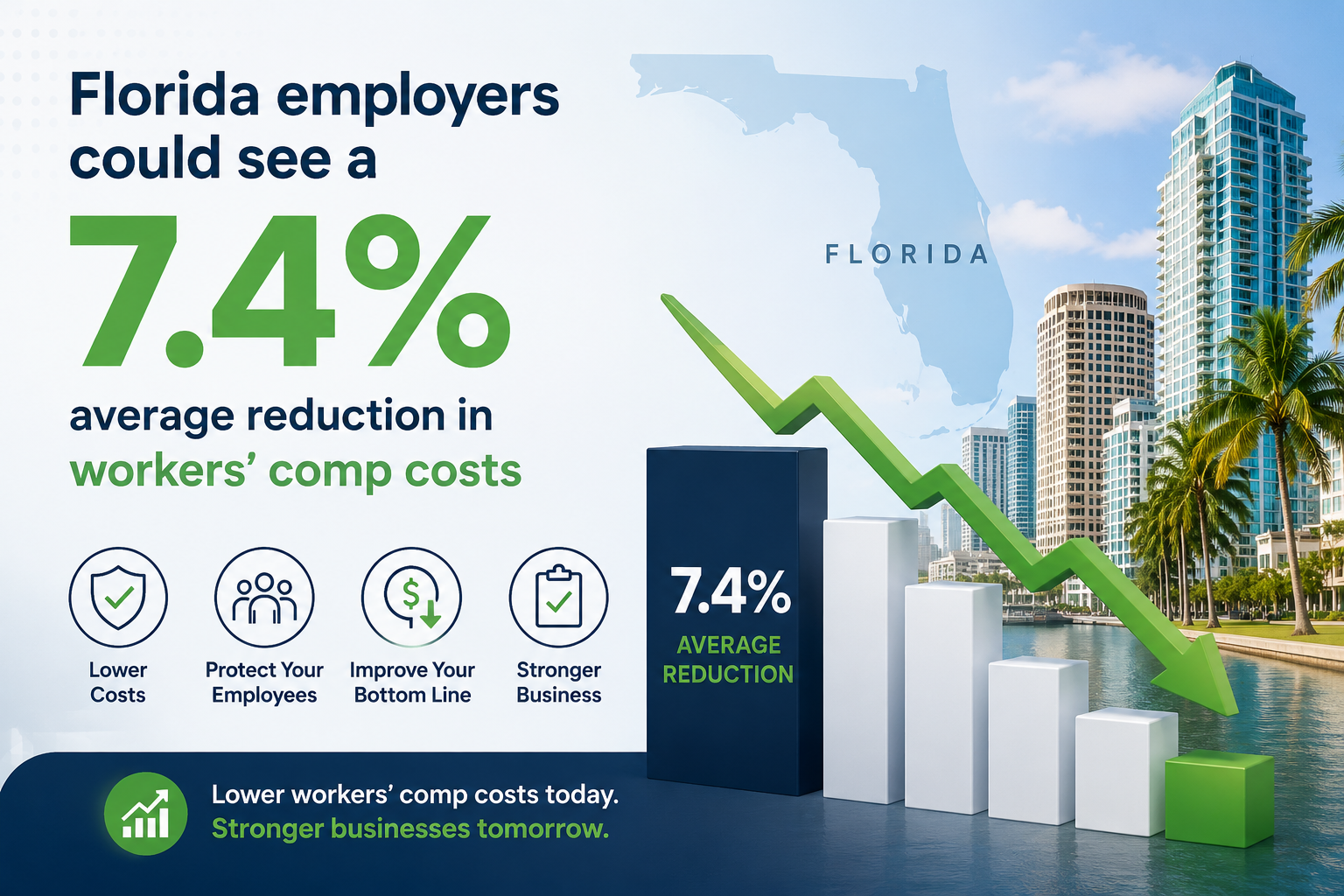
The National Council on Compensation Insurance (NCCI) is recommending that workers’ compensation rates be reduced by an average of 7.4% beginning Jan 1, 2027.
NCCI reviewed premium and loss experience for Florida employers across policy years 2023 and 2024 to arrive at the 7.4% figure.
Two things stand out in that experience.
Lost-time claim frequency continues to decline. Fewer employees are missing work due to workplace injury. NCCI and Florida's business community frame this the same way: safer workplaces.
Payroll is also outlining medical costs. Nationwide, payroll grew 4.8% between 2024 and 2025. Employment growth, most of it concentrated in healthcare, rose just 0.5% over the same period.
That gap matters more than it might first appear.
Workers' compensation premiums are calculated against payroll. When payroll grows faster than claims costs, the medical loss ratio comes lower than expected. A lower loss ratio supports a lower recommended rate.
Wages went up. Injuries went down. Together, those two trends are why this filing exists.
There's a small headwind in the mix too; an increase tied to updated Florida medical fee schedules, aligning physician reimbursement with Medicare's 2026 methodology. The reported size of that increase varies by outlet: Business Insurance cites 0.6%, while Florida Phoenix and Orlando Weekly cite 0.06%. The underlying filing isn't public, so we can't independently confirm which figure is correct, but either way, it's not large enough to change the overall direction of the recommendation.
A Softer Trend Nationally
Florida's story is a good one. But it's not the whole country's story.
Nationwide, the workers' compensation combined ratio across NCCI states climbed to 91% in 2025, up from 86% in 2024.
That's happening at the same time, lost-time claim frequency fell 2% nationally.
Read that again.
Claims are getting less frequent. Underwriting profitability is still tightening.
Frequency and profitability aren't always moving in the same direction, and that's a reminder that a favorable claims trend doesn't automatically translate into a favorable rate environment everywhere. Florida's specific combination of declining frequency and above-average wage growth is producing a strong result. Other states, working from a different mix of the same underlying pressures, may not see the same outcome.
An Open Question
Florida's trend has now run for a full decade.
At what point does a decade-long rate decline stop being a cyclical trend and start being a structural feature of the market, and what would it take to reverse it?
That's not a rhetorical question. It's one worth discussing with clients, carriers, and colleagues as this filing moves toward a final order.