
Industry-Specific Operations: Understanding How the Work Gets Done
Reni Snider, Senior Account Executive, Libertate Insurance
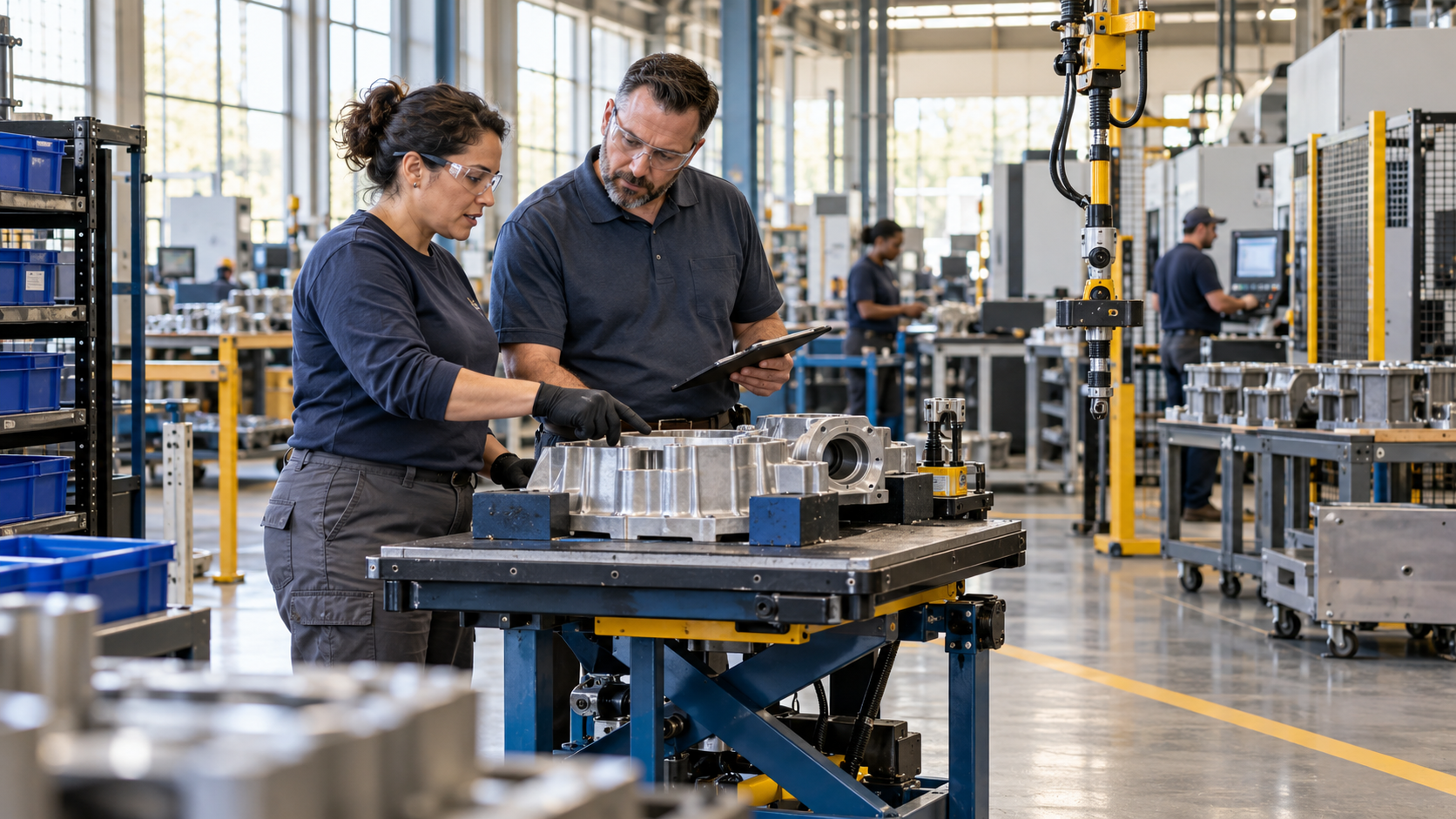
Two manufacturers produce similar products. One relies heavily on employees to move materials manually. The other uses automated equipment, with employees responsible for setup, troubleshooting and maintenance.
This hypothetical comparison does not tell us which employer will have better workers’ compensation results. It does raise two useful questions.
What would we need to know about their tasks, equipment and workforce to understand their exposures?
And, for actuarial purposes, how could we quantify those observations?
Industry and classification provide essential context. Understanding how the work gets done may provide additional evidence worth investigating.
Industry Is a Starting Point
The Bureau of Labor Statistics reported that private industry employers experienced 2.3 total recordable injuries and illnesses per 100 full-time-equivalent workers in 2024. Manufacturing recorded a rate of 2.7, while transportation and warehousing recorded 4.4.
These are employer-reported injury and illness rates, rather than workers’ compensation claim rates. They illustrate differences across broad industries without explaining the performance of an individual employer.
Workers’ compensation classifications and industry groupings also serve different purposes. Neither eliminates the need to understand an employer’s operations.
Experienced underwriters already ask about products, processes, equipment and employee responsibilities. The emerging opportunity is to examine whether more of that operational understanding can be captured consistently, measured meaningfully and tested against future outcomes.
A description helps us understand a business. A measurable variable gives actuarial science something to investigate.
What Small Details Might Tell Us
My mentor, Paul Hughes, often recounts a conversation he had with an actuary many years ago. As Paul recounts it, the actuary suggested that knowing whether a small employer recognized employees’ birthdays could sometimes tell him more about how the business operated than its loss runs.
It is a memorable observation because it looks beyond the usual underwriting submission and into the employment relationship itself.
Could a practice as simple as acknowledging birthdays reflect management’s attentiveness, familiarity with employees or broader approach to employment?
Paul’s story raises that possibility. It does not establish birthday recognition as a predictor of workers’ compensation results. A thoughtful gesture alone cannot demonstrate effective supervision or well-controlled operations.
But the underlying question belongs in this discussion: Which everyday characteristics of an employer might reveal something worth investigating?
For PEOs, whose business centers on supporting employment, that question has particular relevance. Understanding a client means understanding both the work being performed and the organization in which people perform it.
The next challenge is measurement. How would we define an observation consistently, distinguish a meaningful practice from a superficial gesture, and test whether it adds information beyond established underwriting measures?
Looking Inside the Work
Consider the questions that arise within familiar industries.
In manufacturing, how much employee time involves material handling, machine operation, equipment setup or maintenance?
In warehousing, what items are handled, how are they moved, and how does the workflow change during peak periods?
In construction, how do tasks and exposures change across project phases, elevations and shared worksites?
In home care, what assistance is available when an employee encounters a physically demanding patient-handling task?
These questions describe different operational realities. Whether particular answers improve prediction beyond information already captured in classification and historical experience remains an empirical question.
They also connect to themes explored earlier in this series.
Could hiring velocity have different implications in a highly standardized process than in work requiring extensive task-specific experience? Could employee tenure become more informative when considered alongside equipment changes or reassignment?
The operational setting may help us ask more precise questions about the workforce performing the work.
From Observation to Measurement
“The work is physically demanding” is an observation.
How would we represent it in a dataset?
Potential measures might include hours spent handling loads within defined weight ranges, the frequency of particular tasks, or the portion of a shift spent performing repetitive work.
Similarly, “employees work substantial overtime” could become the percentage of employee-weeks exceeding a specified hours threshold, segmented by job or task.
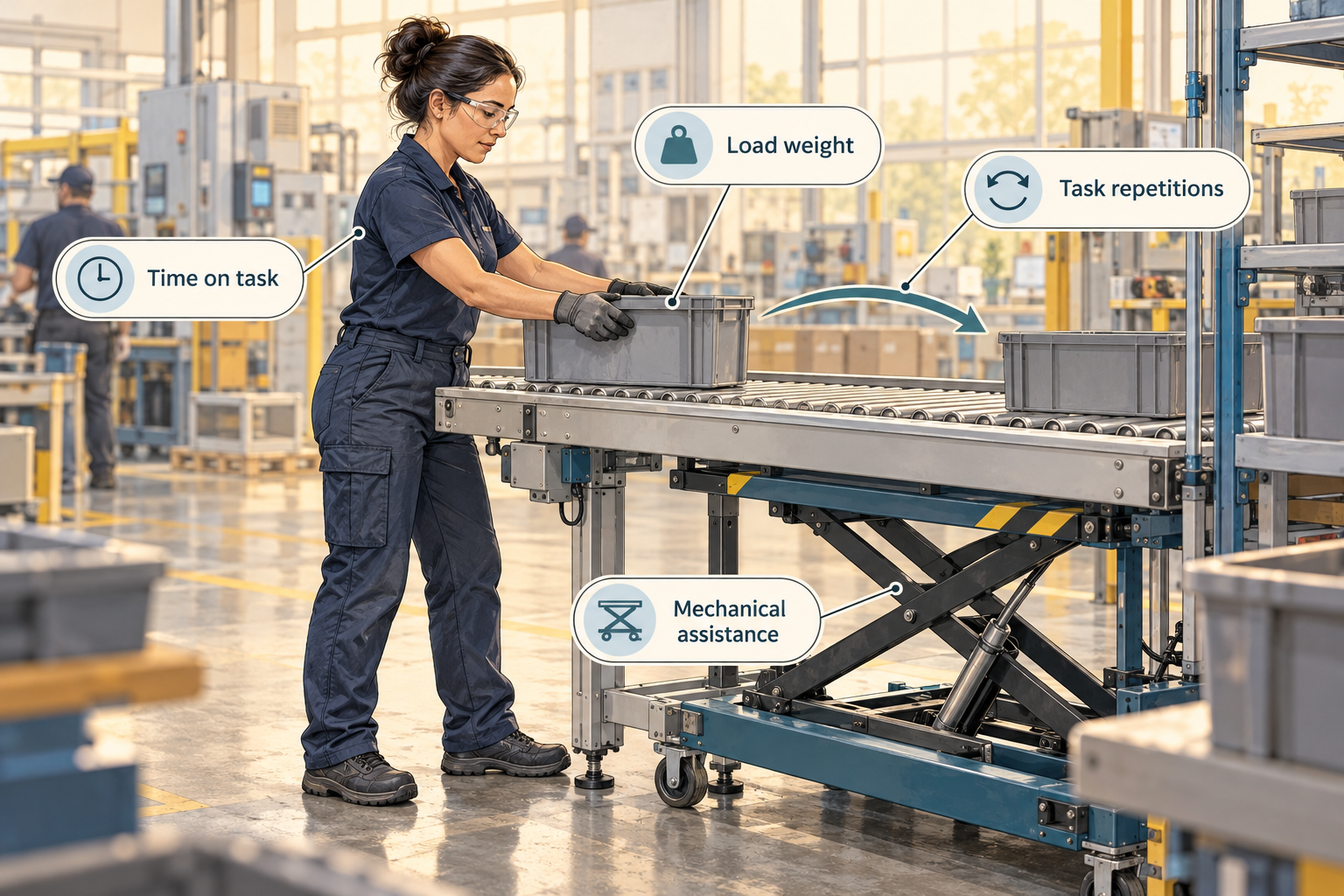
These are illustrative candidates for investigation. They are not validated predictors, and no particular threshold is being recommended.
The denominator deserves attention, too. Total overtime hours, overtime as a share of hours worked, and overtime concentrated among a small group of employees describe different conditions.
Before any of those measures could support credible analysis, we would need to ask whether employers define and record them consistently, whether they describe the relevant exposure, and whether collecting them is practical.
The objective is useful evidence. Collecting detail has value only when that detail can support the question being asked.
Operations Change. Historical Results Need Context.
An employer’s loss history reflects work performed under earlier conditions. New machinery, products, shifts or contracts raise a reasonable question: How closely does that experience describe today’s operation?
NCCI’s September 2026 manufacturing analysis illustrates how substantially an industry can change from within. Chemical products, transportation equipment, and computer and electronic products accounted for approximately 50% of manufacturing output in 2025, compared with roughly 37% in 2005.
NCCI also identified a strong historical correlation between increased manufacturing productivity and declining injury rates. That finding does not establish that every automation project improves safety or that productivity alone explains an employer’s results. It does provide a research-based reason to examine how changing production methods relate to changing exposure.
Automated production still involves people. Understanding their remaining tasks—and any newly introduced responsibilities—is part of understanding the operation.
The Science Still Requires Evidence
As discussed earlier in this series, “The science itself hasn’t changed. The laboratory has.” (peocompass.com)
Operational systems generate more information. Analytical tools make more relationships practical to investigate. Neither guarantees that a proposed variable will improve prediction.
Does it contribute information beyond industry, classification, workforce characteristics and historical losses? Does the relationship persist across comparable employers and different periods? Was the information available before the outcome being predicted?
Some operational measures may prove useful. Others may duplicate existing information or fail to hold up outside the original analysis.
That is how evidence develops.
An Opportunity Within PEO Data
For PEOs, this discussion has particular relevance.
NAPEO describes a model that brings together employment services such as payroll, benefits, human resources, workers’ compensation and compliance assistance, while client companies retain responsibility for daily business operations and employee supervision. The allocation of responsibilities depends on the client service agreement.
That structure creates a compelling opportunity.
Where systems and access permit, a PEO may be able to connect workforce information with operational descriptions, training records, safety observations and claims across multiple client companies.
Could those connections support research that would be difficult to conduct within one small employer? Could comparable operations be studied together while preserving the differences that matter?
The opportunity may lie as much in connecting existing records as in collecting new ones.
But available data is not automatically ready for analysis. Definitions, identifiers, historical completeness and appropriate permissions matter. A large employee count also does not, by itself, establish statistical credibility.
The promise deserves investigation with the same discipline applied to any other actuarial question.

Bringing Employment Expertise Closer to the Work
The larger opportunity extends beyond prediction.
A manufacturer specializes in making products. A contractor specializes in building. A healthcare provider specializes in caring for patients.
The PEO’s business centers on employment.
In my view, that is why understanding client operations belongs at the heart of the PEO relationship. It gives employment expertise a practical setting: the tasks employees perform, the supervisors supporting them and the conditions they encounter.
The business model creates an opportunity to bring complementary services together around those realities. Its value depends on the quality of those services, coordination with the client and daily implementation.
The ambition should be a higher caliber of employment.
People prepared for their responsibilities. Supervisors supported in leading them. Hazards addressed thoughtfully. Injured employees supported through recovery. Workplaces where people can earn a living and build a future.
Understanding how work gets done can help identify where support may be needed today. Quantifying that understanding gives actuarial science new questions to test about tomorrow.
PEOs have an opportunity to contribute to both.